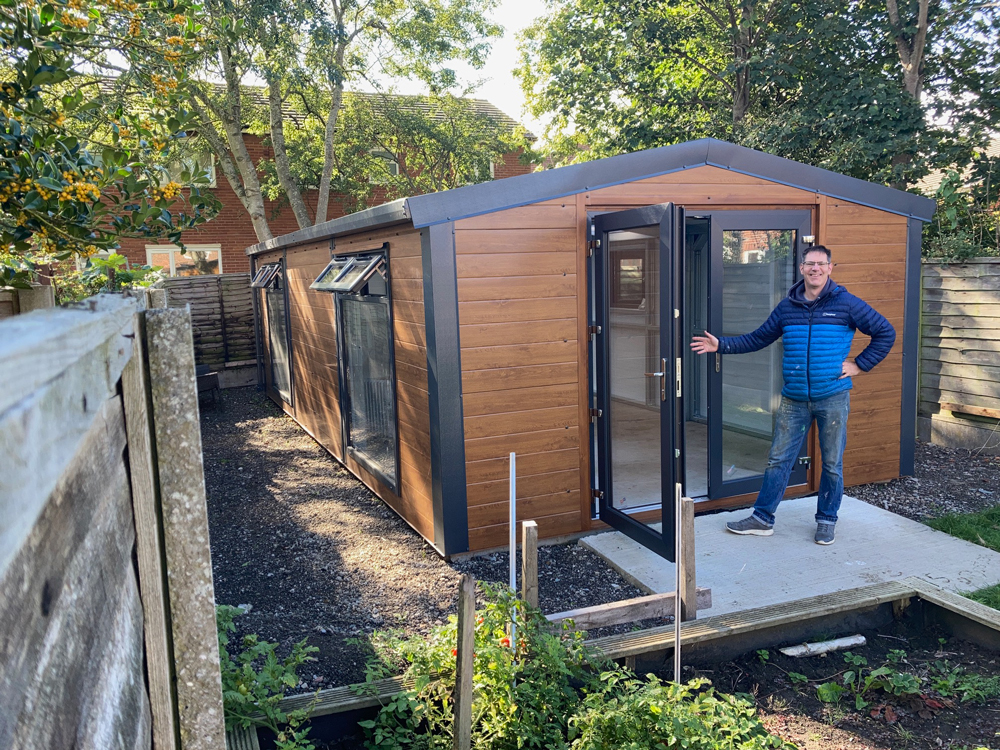
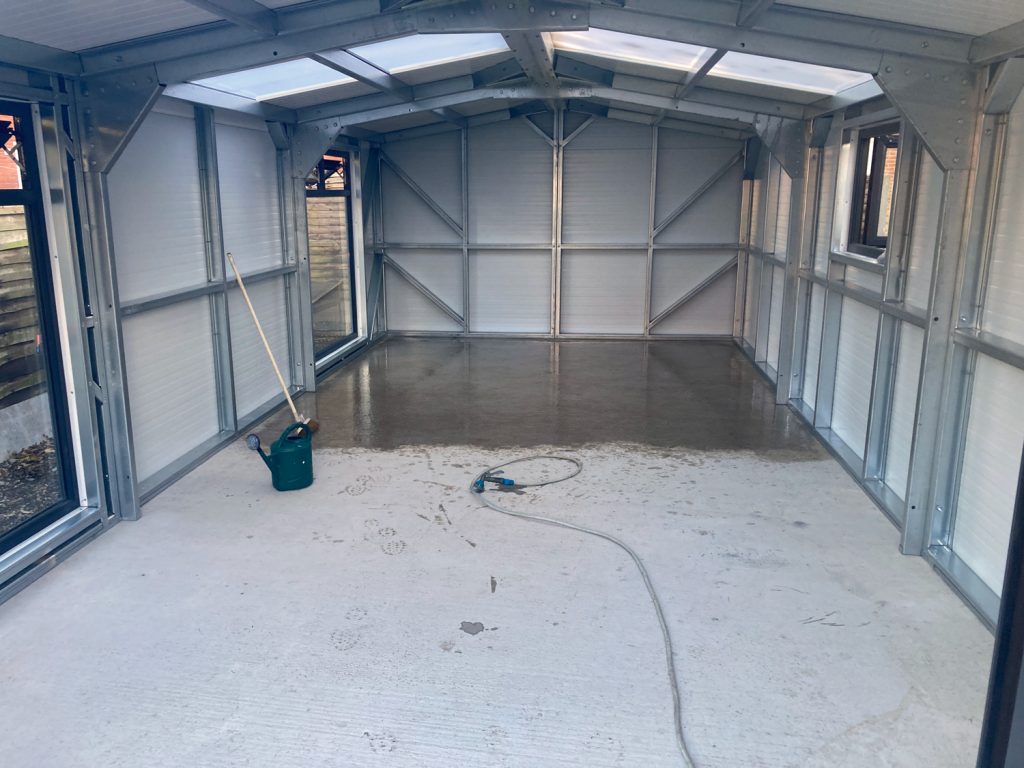
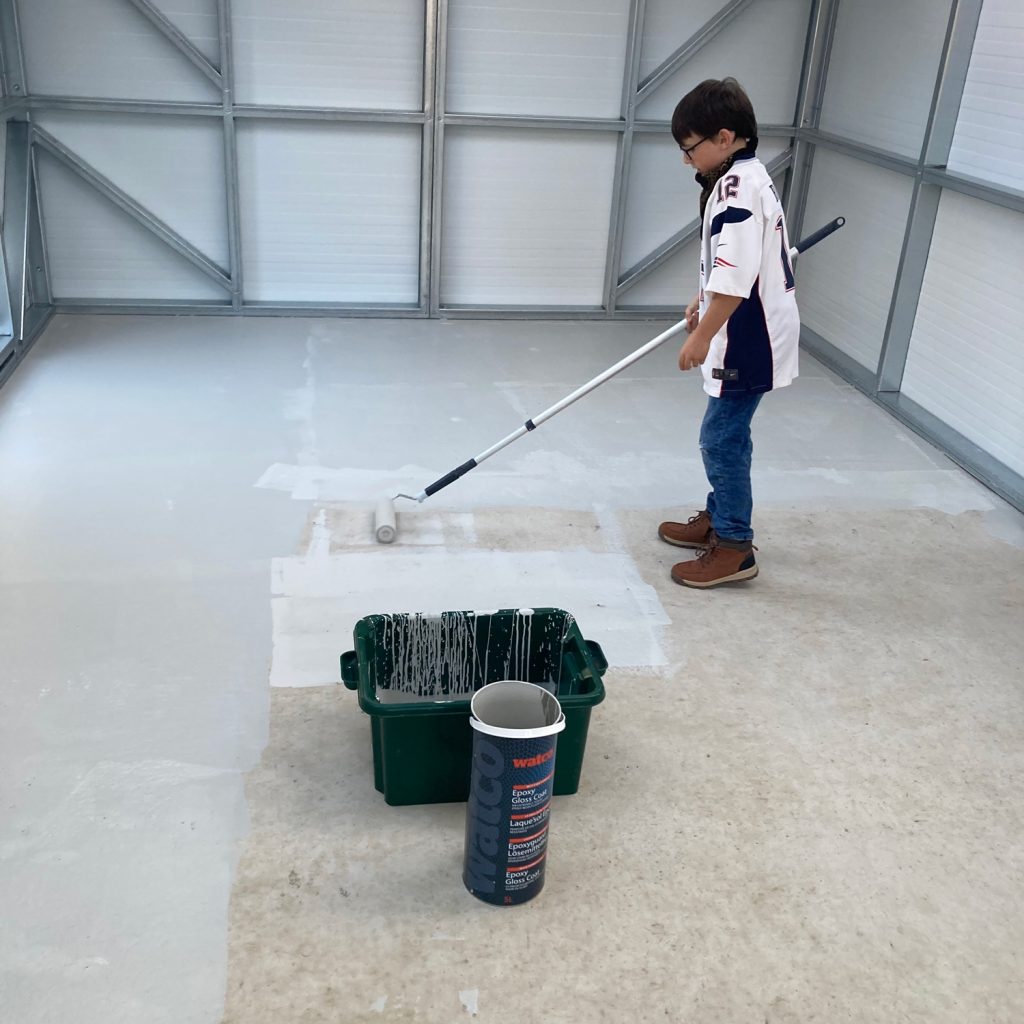
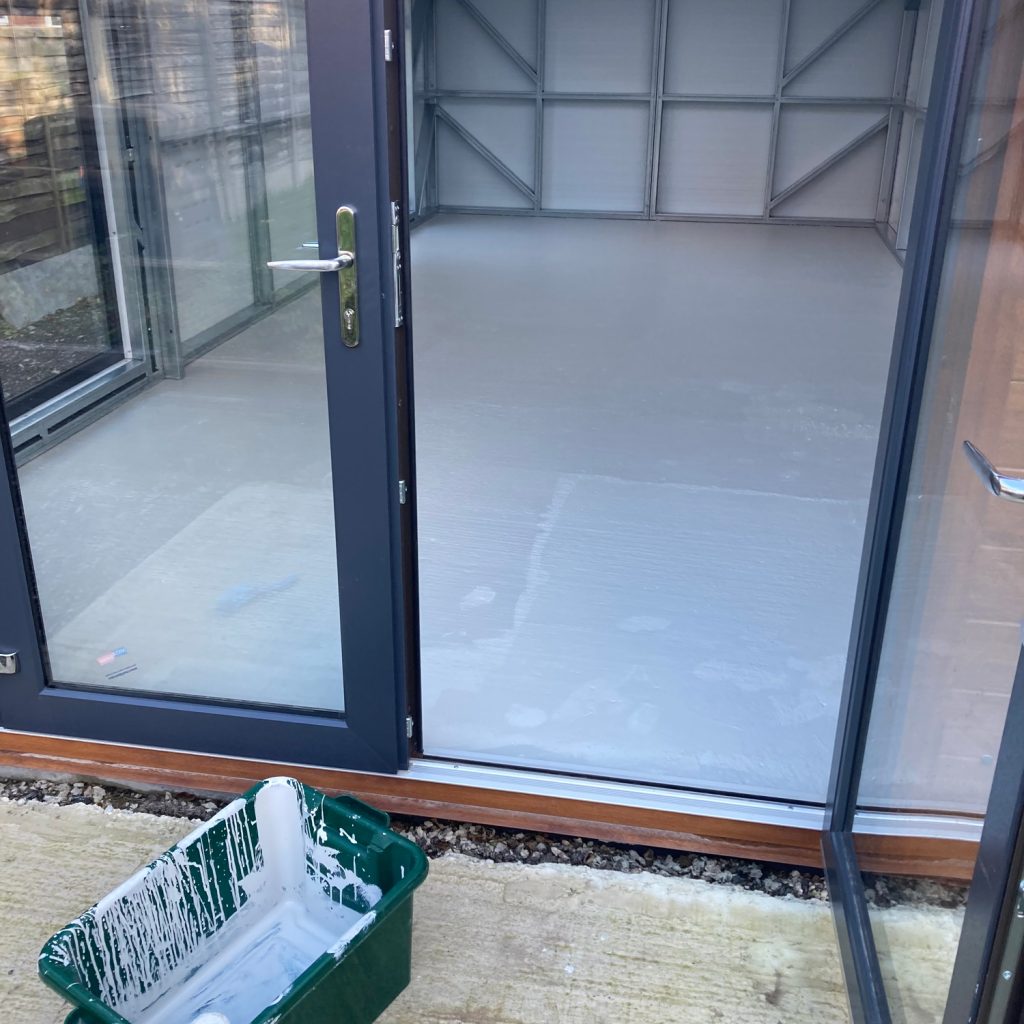
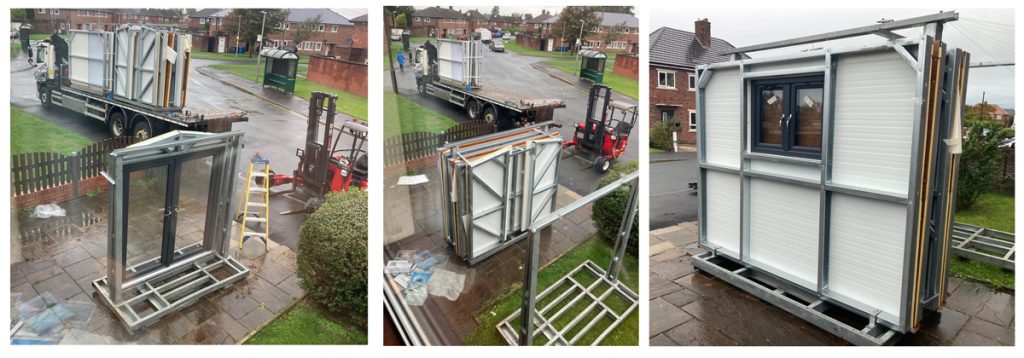
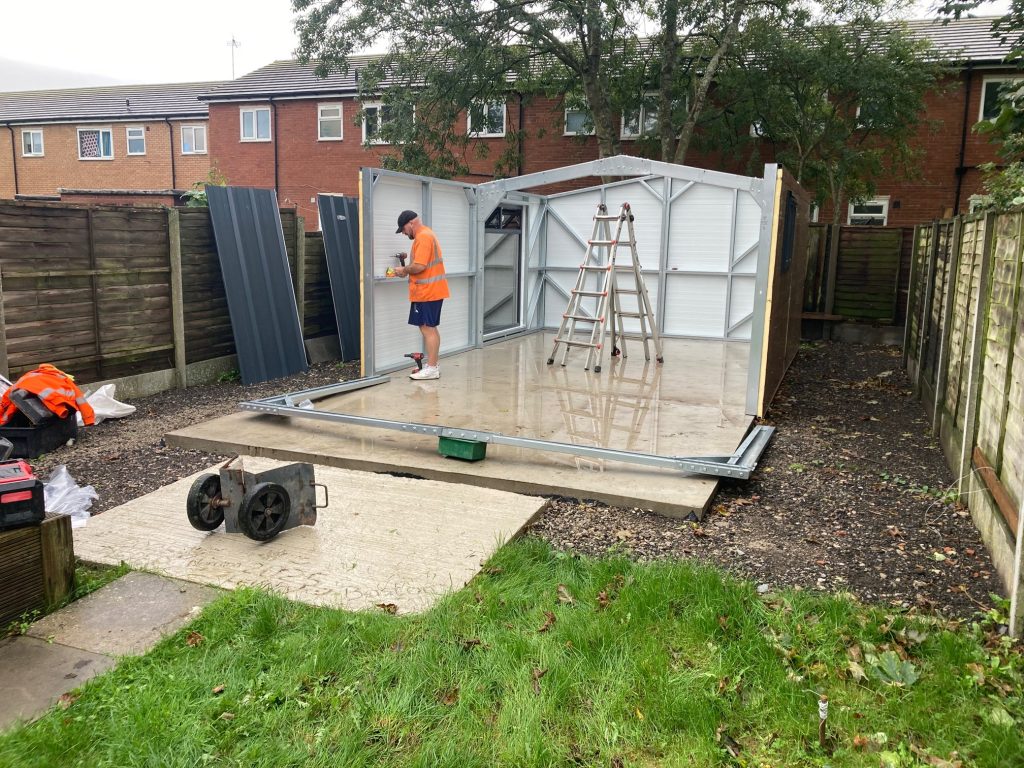
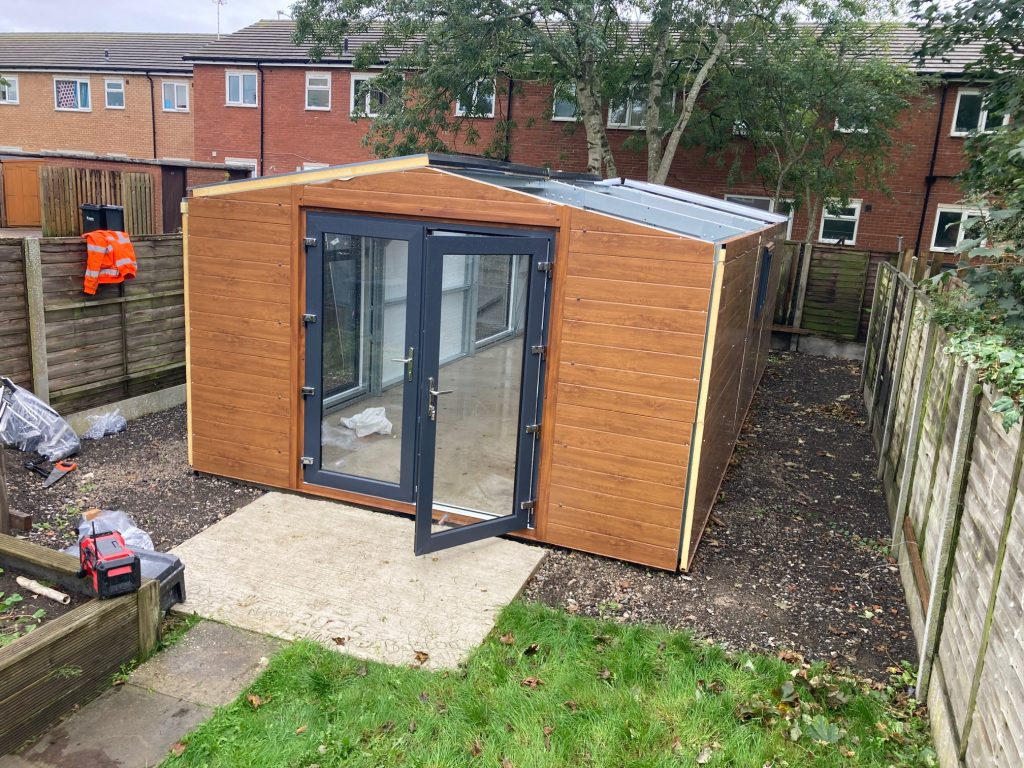
So there were a few delays, none of which were the fault of Hansons builders. One of their employees tragically lost his life so understandably production was paused. Then there was some damage to the panels at the workshop resulting in another delay. On Monday 15th Sept, Mike and Kyle arrived at 7am with the studio loaded in their lorry. Unfortunately, wind speeds of 45 – 55 mph are not advisable for carrying large panels.
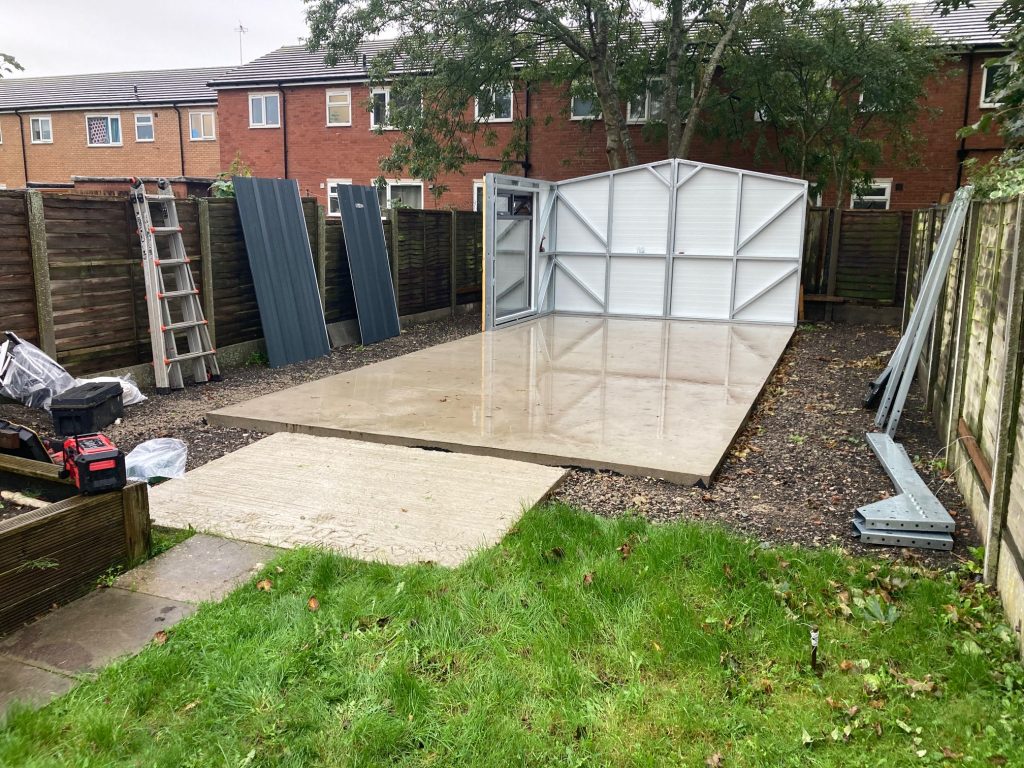
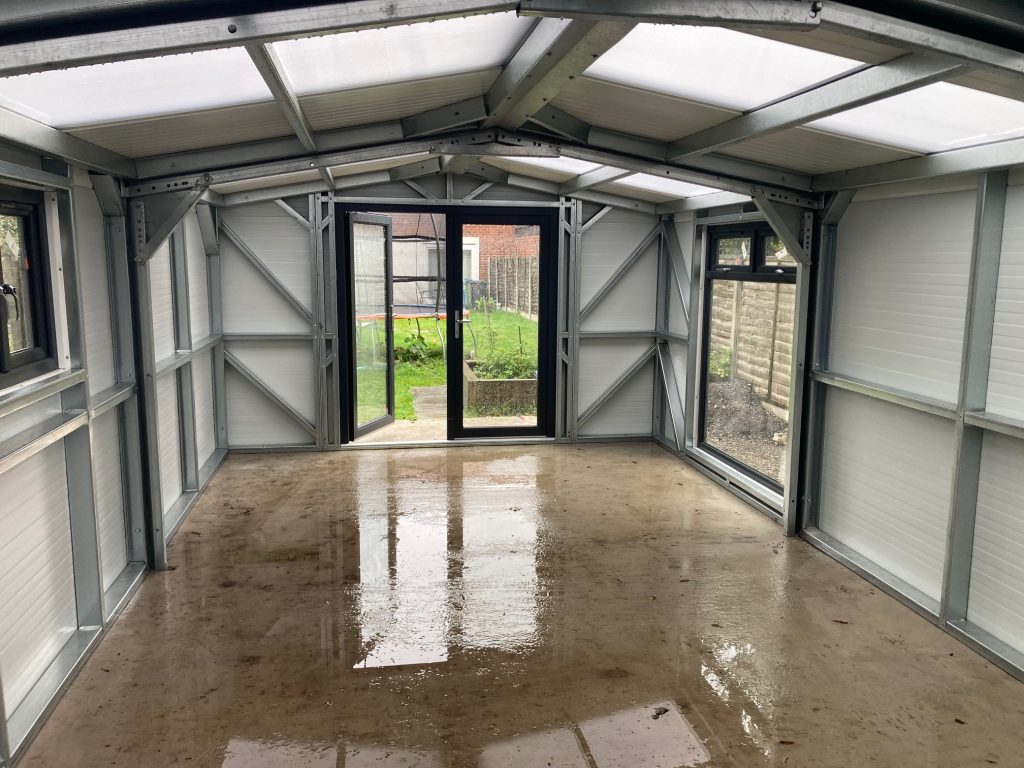
Five days later they made the same 2-hour trip from Yorkshire to be greeted by a generous Lancashire downpour.
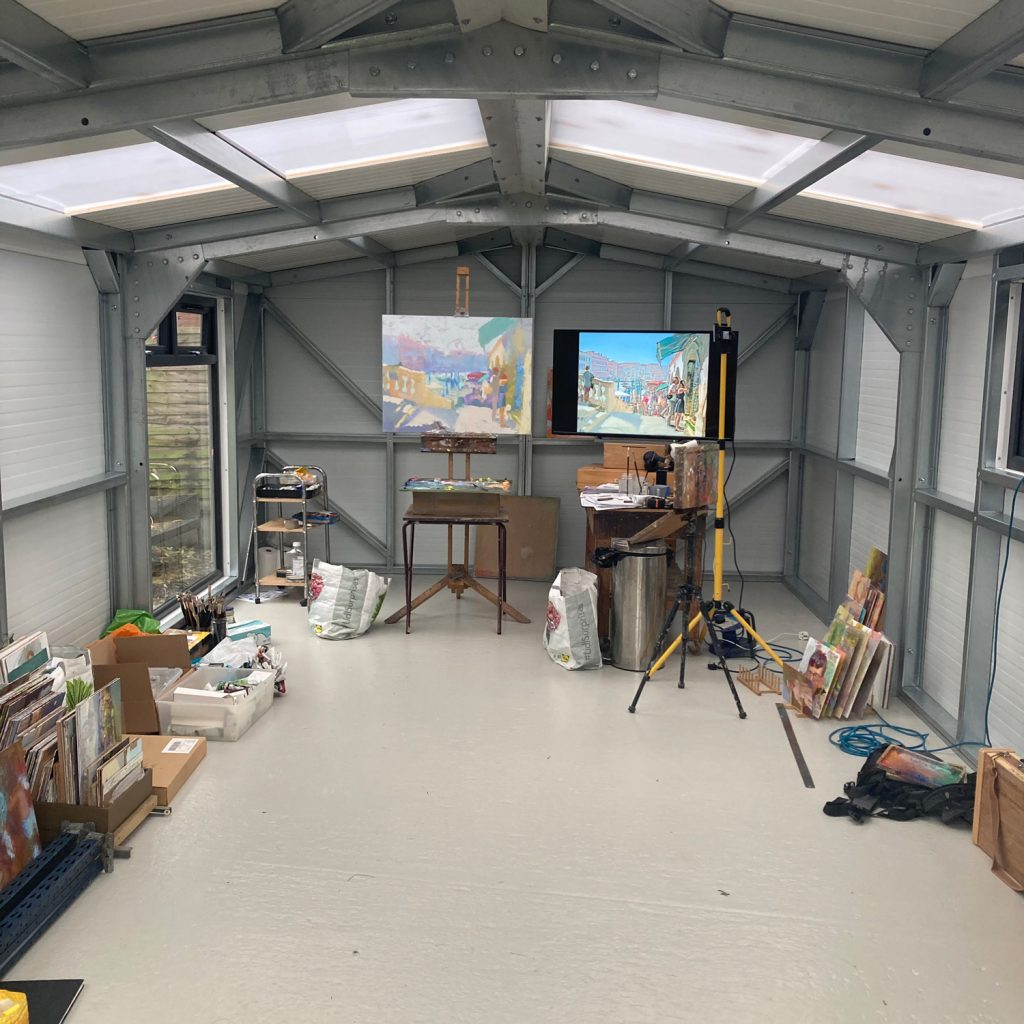
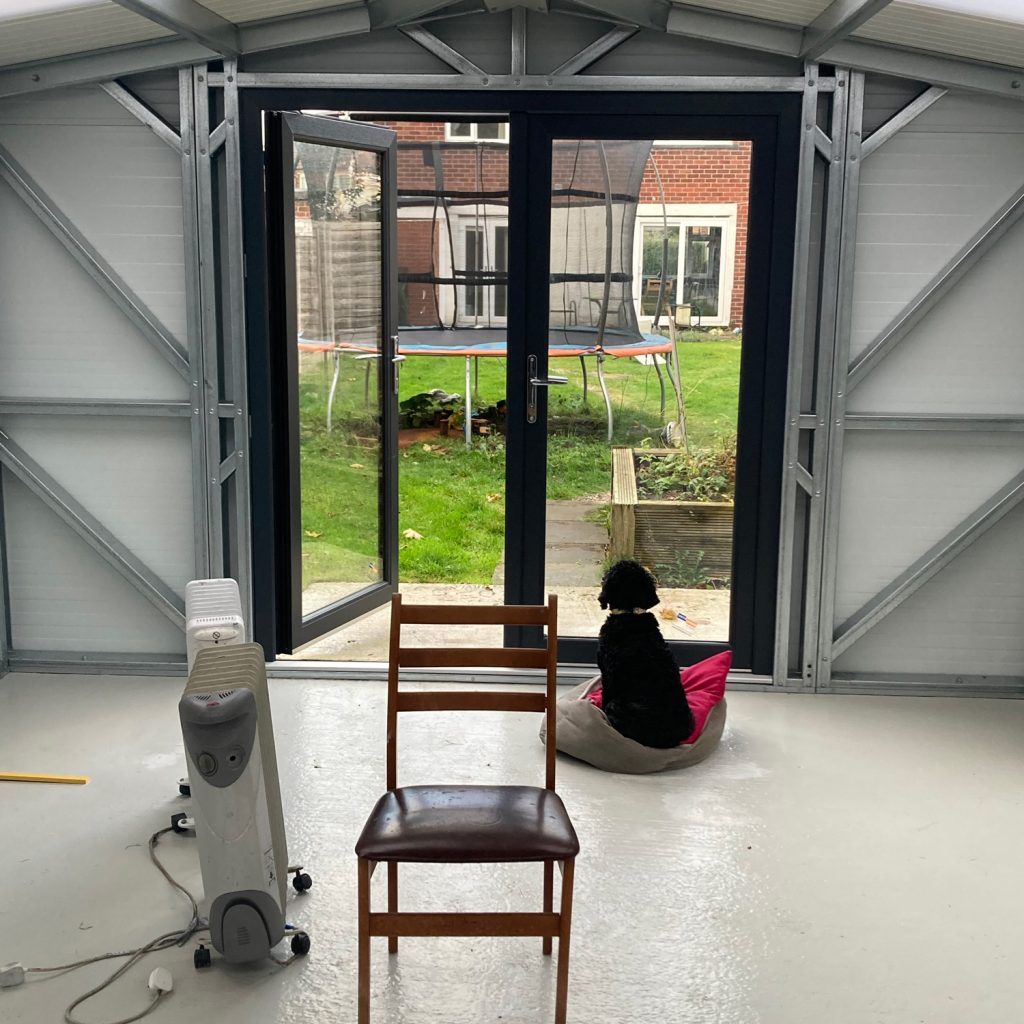
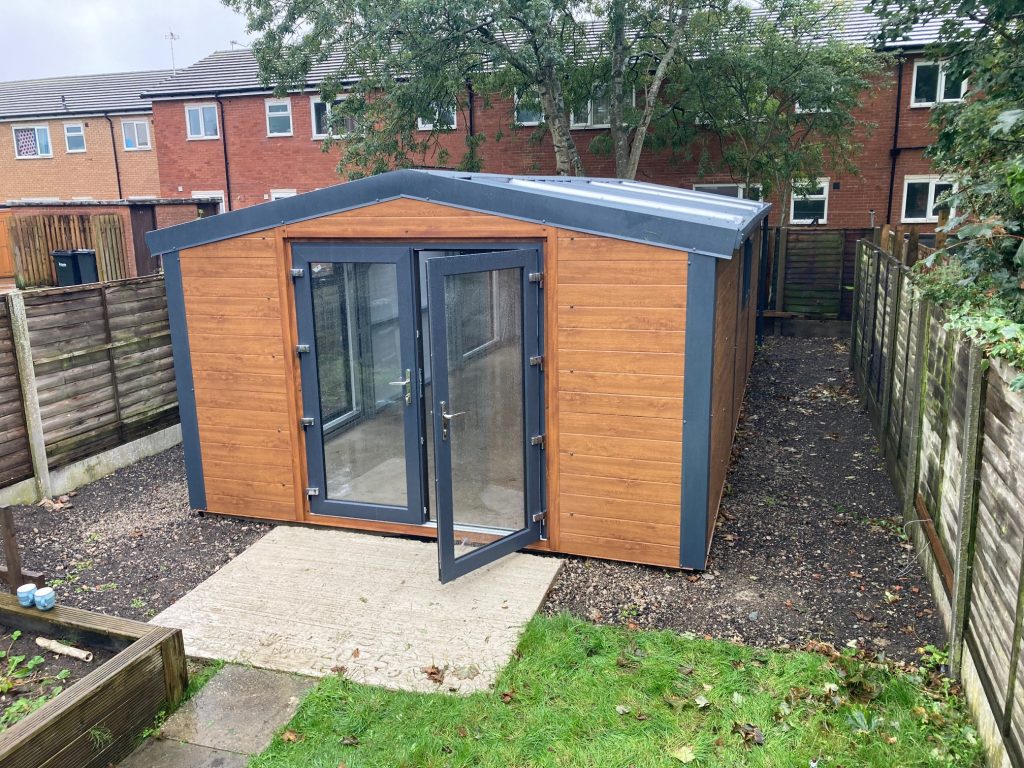
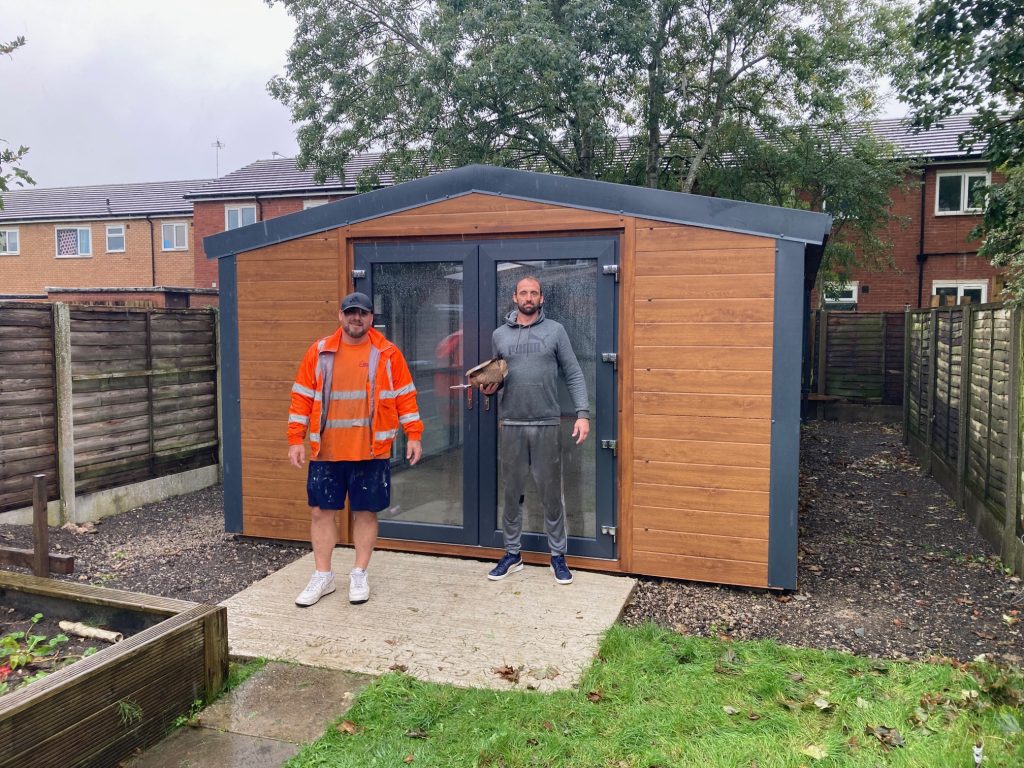
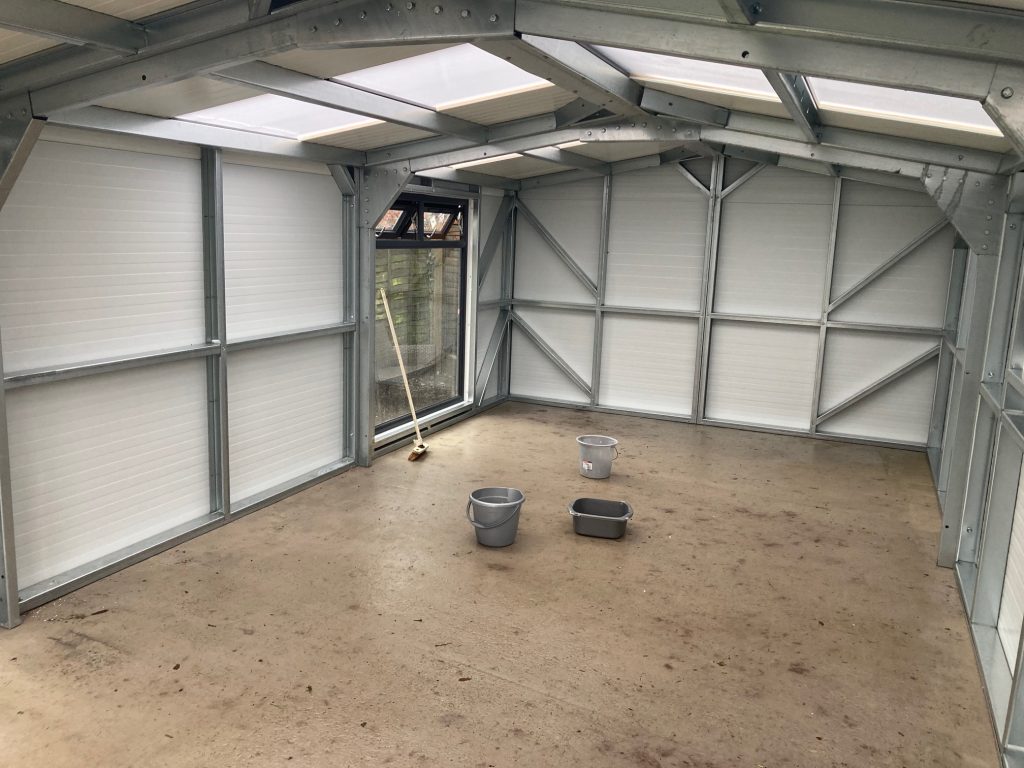
Those guys don’t mess about. 6 hours later these coffee-fuelled workhorses had constructed this beautiful studio!
I’m so pleased. Now I just mopping up and getting used to having my own real studio!
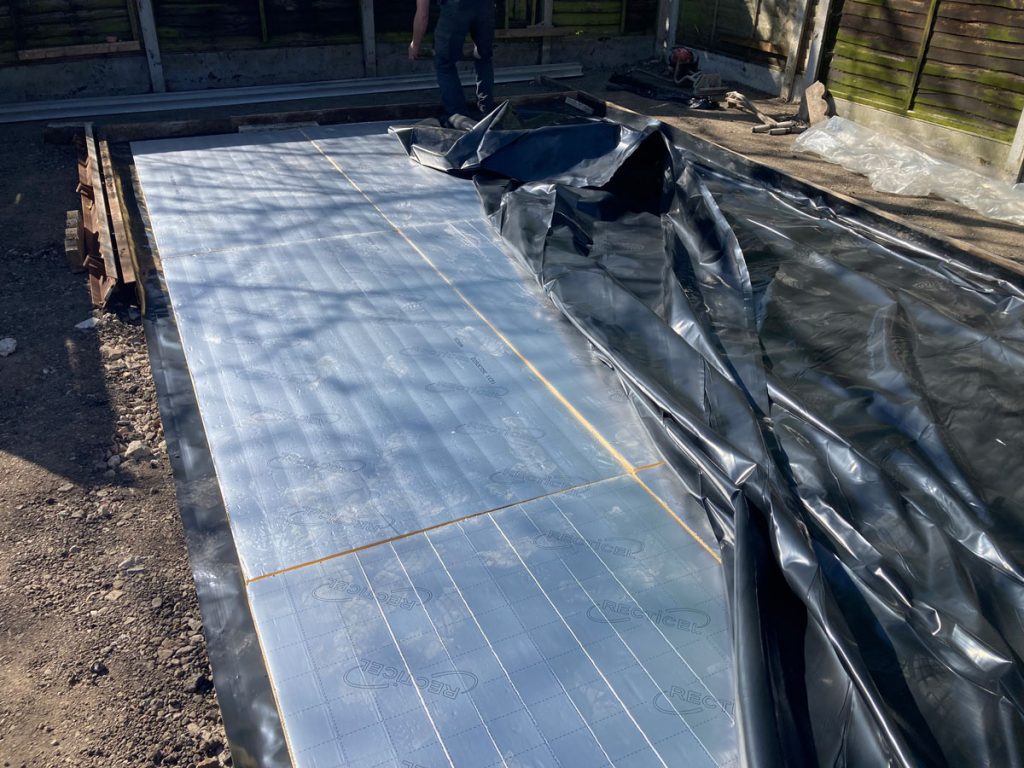
We planned to do the concrete pour on Saturday, but discovered we could save money by ordering the load on a weekday. Paul arrived early with the underfloor insulation panels and DPM (Damp Proof Membrane).
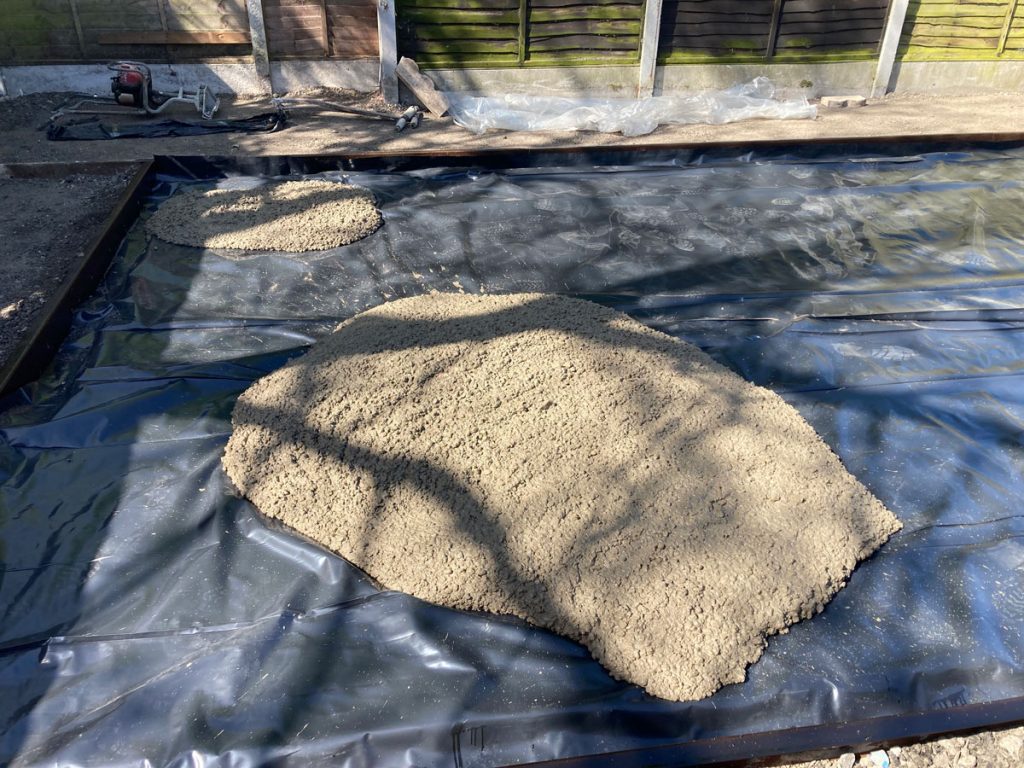
We laid the damp proof sheeting, scored the surface of each insulation panel to make them flexible, then added more sheeting on top.
I finally get to do some OIL PAINTING! This is old engine oil, painted onto the shuttering to prevent the concrete from sticking.
It’s full steam ahead when the concrete arrives at 10.30. I never skip lunch but today it was only when Lindsey called at 3.20 that I took a breath.
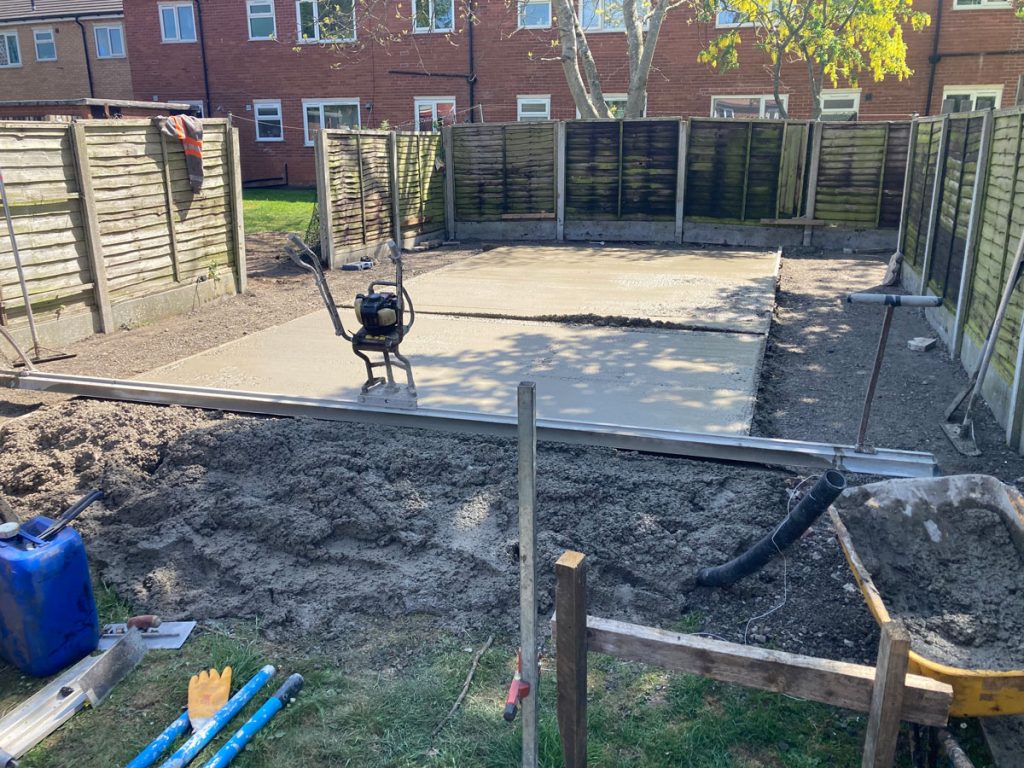
A huge beam and vibrating machine was dragged across the surface to level it out. I’m not used to this physical work!
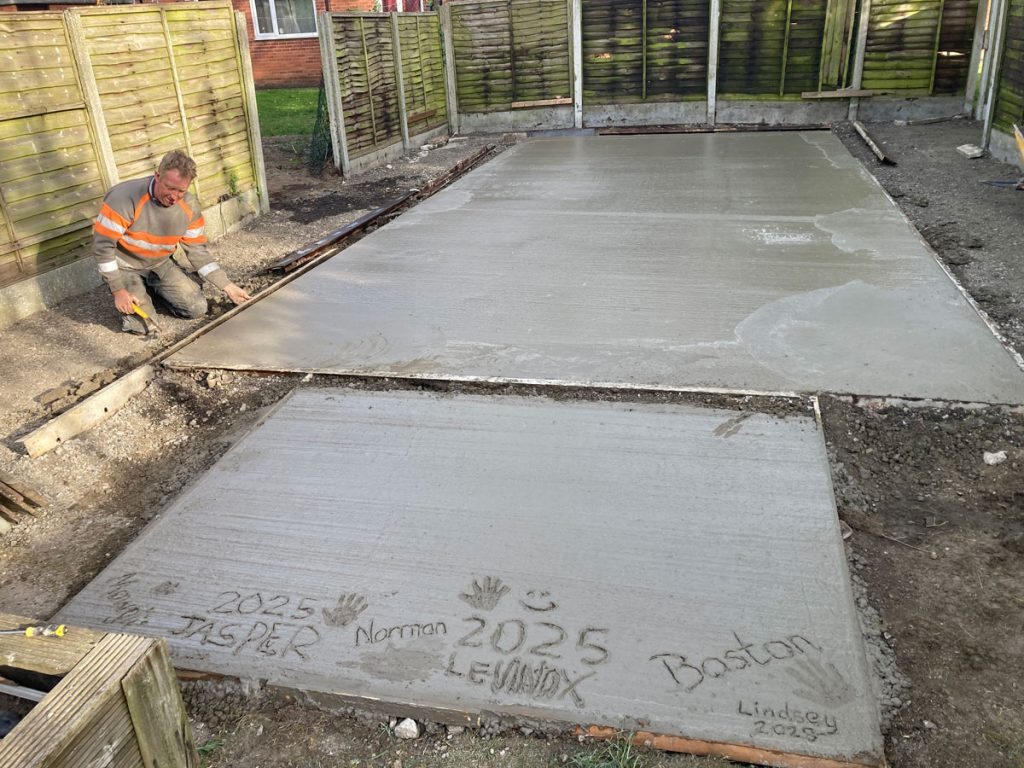
We soon discovered we had too much concrete. What to do with the excess?
We decided to add a ramp. Nicely signed by all the family, including Mowgli the dog. At the end of a long day we were just packing up when we realised the concrete had already set. So off came the shuttering to save a return journey.
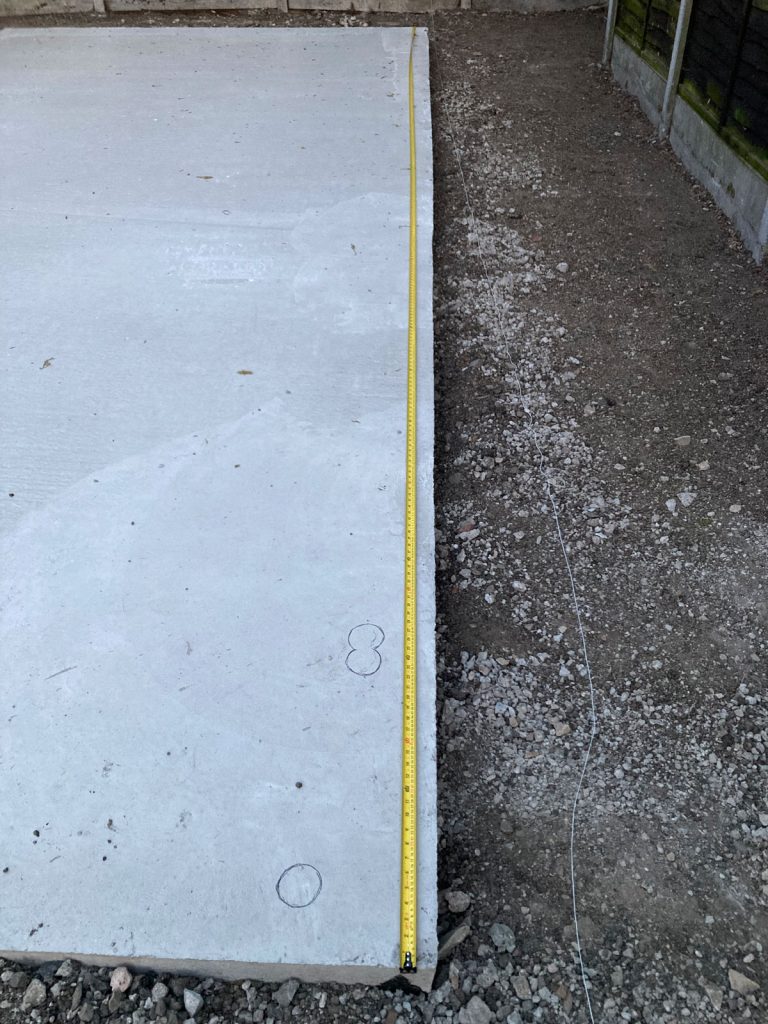
When I got back from the Affordable Art Fair, I got myself a long enough tape measure and a string line to see how things were.
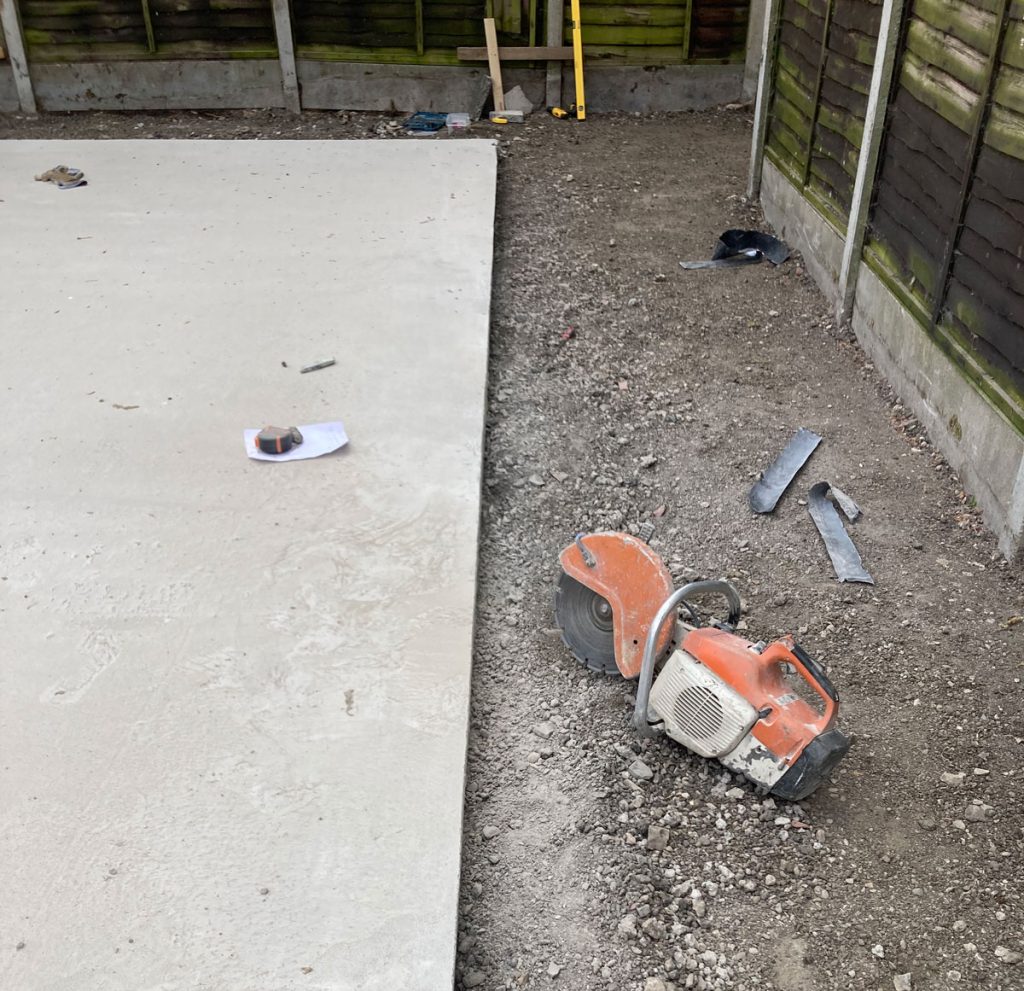
Paul lent me his beast of a cut-off saw to tidy up the edges where the shuttering had moved slightly. Loud, dusty work but a nice finish. We’re ready to order the building!
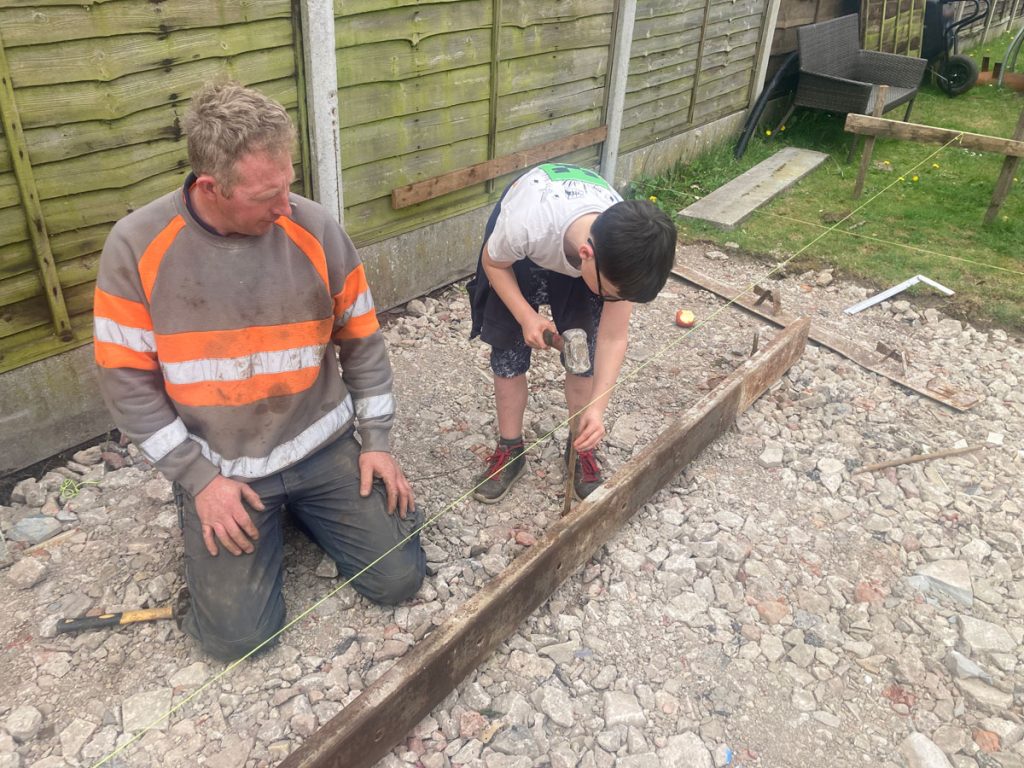
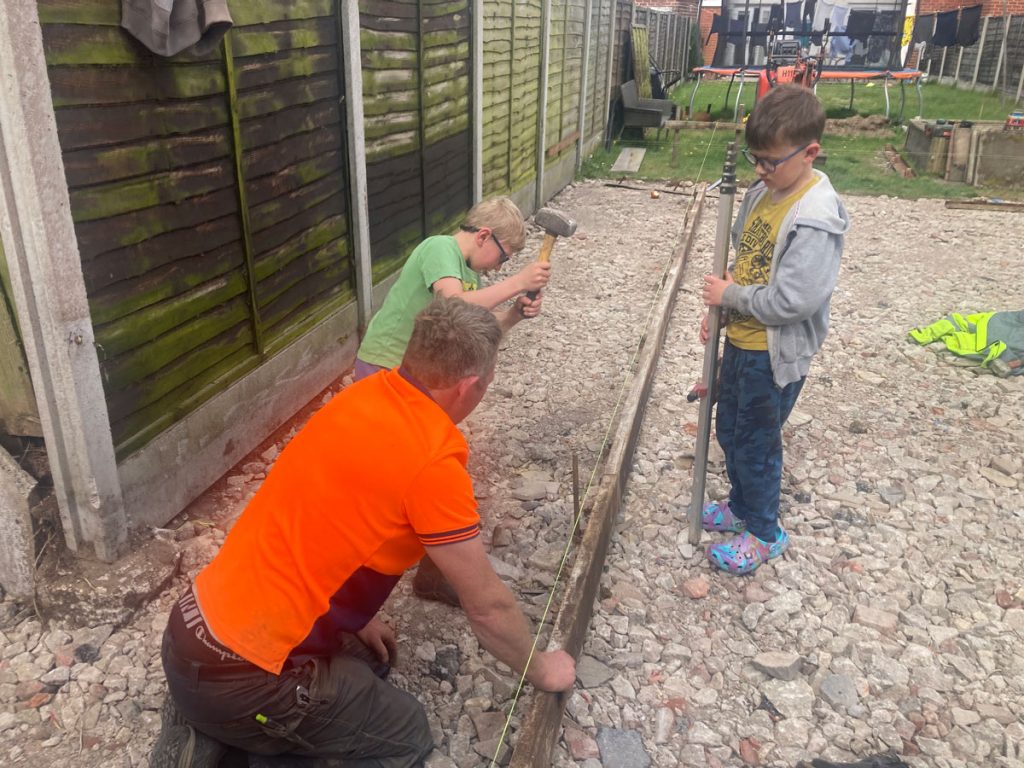
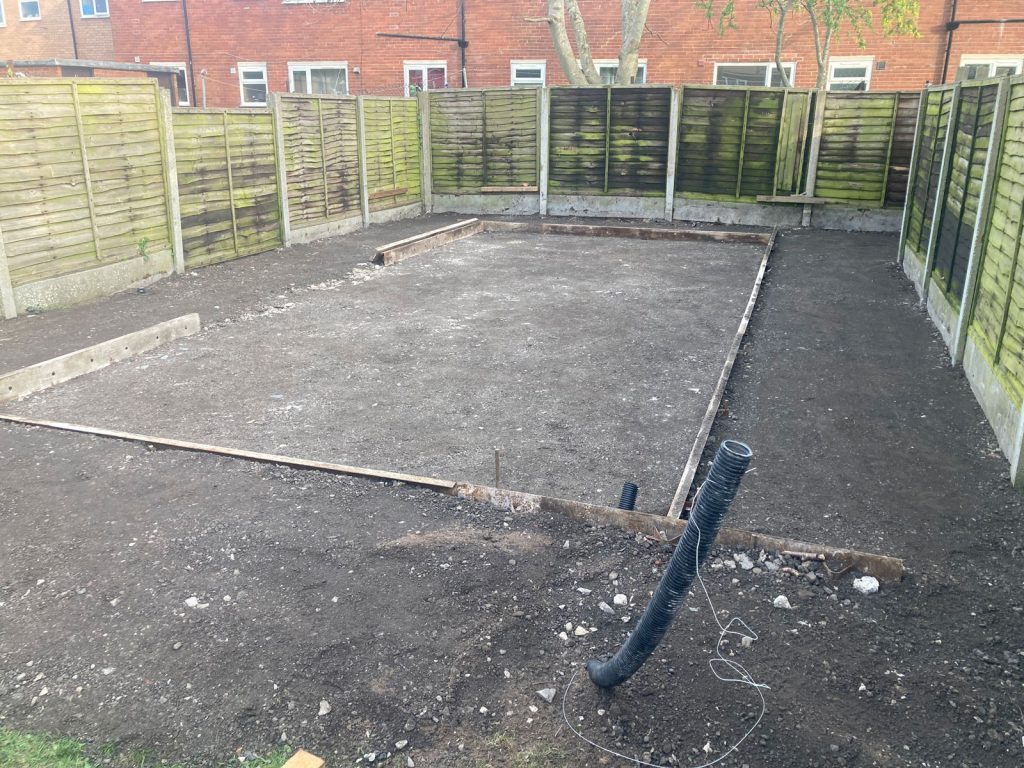
Using the string line to locate the “shuttering” – the metal girders used to hold the concrete in place. The boys were helpful to hammer the pins in place and hold the laser level to get the height right.
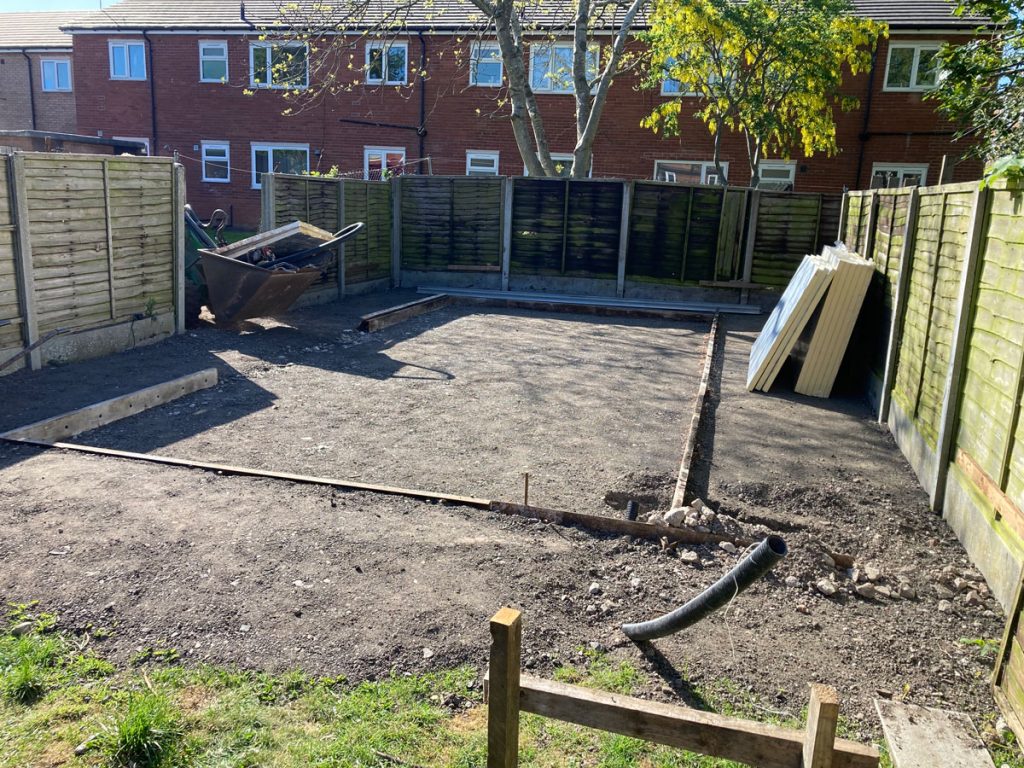
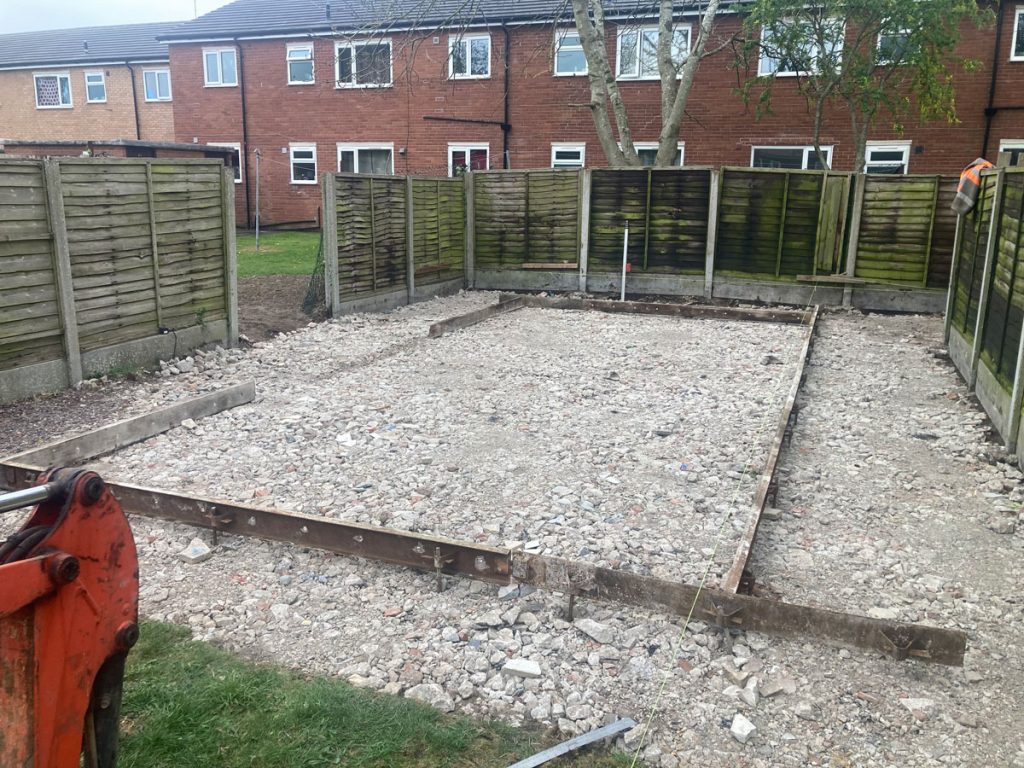
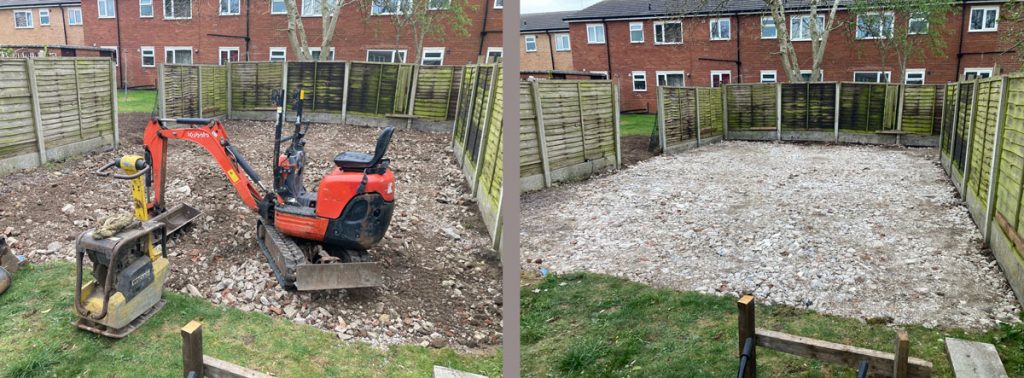
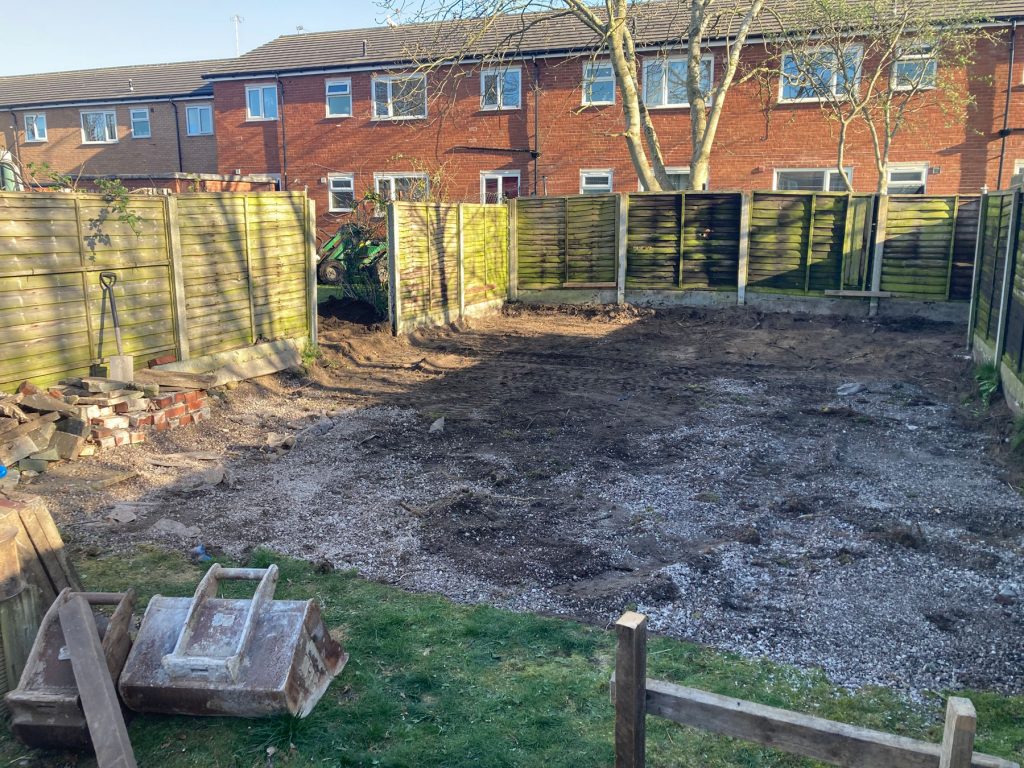
The gap at the side is for digger access to bring in the Motorway planing (finer, dark stone, great for levelling.)
We’re ready to pour! Hopefully next week we will lay insulation boards, then bring in the concrete. The pipe is so that the electric cable can be inserted after the concrete is poured.
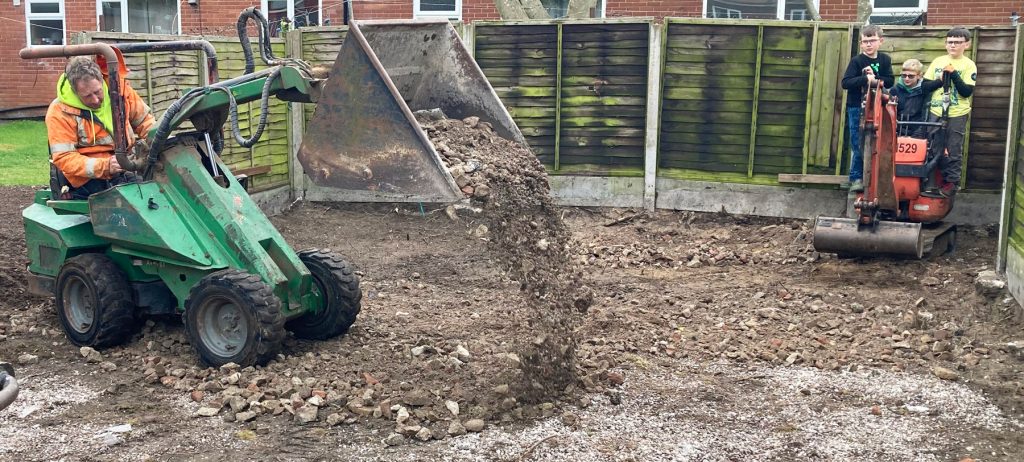
We had some young helpers and my brother was around to help us lay some of the stone. An hour on that yellow plate-whacker left me juddering but made a good solid base.
Well I had a bit of a heart-stopper. Chatting to a friend about my studio project, he mentioned the standard height limit of 2.5 metres for garden sheds. At 4am in the morning I thought I’d better check the wording on the council’s website.
I’d been working under the assumption that the “BOUNDARY OF THE CURTILAGE OF THE DWELLINGHOUSE” referred to the land around the house itself. Not so, it seems, and my plan for a 3 metre roof was shot to pieces.
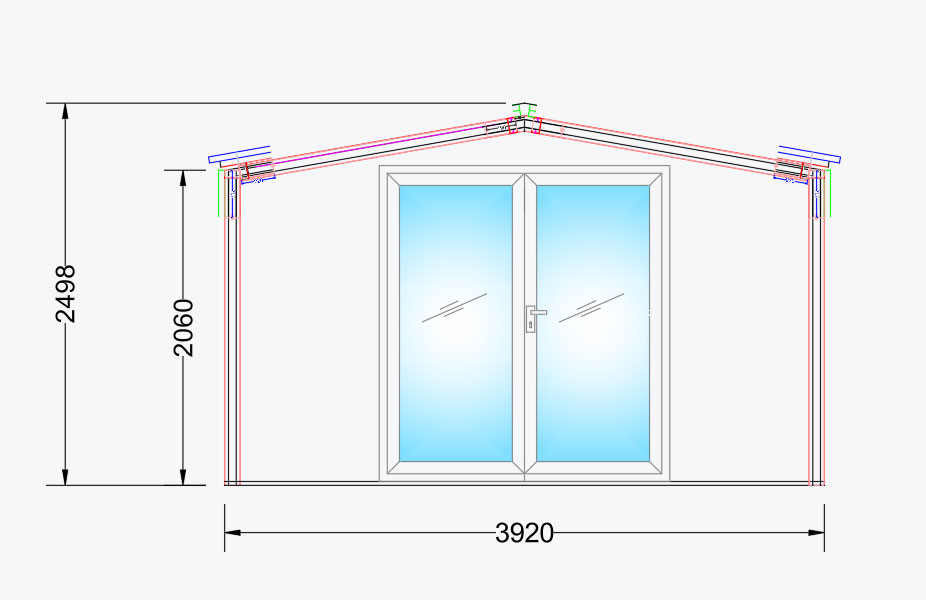
Thankfully, Alex at Hanson’s was able to adjust the eaves height and change the roof pitch from 19 to 10 degrees, bringing the overall height under the permitted 2.5 metres without changing the footprint. So on we go.
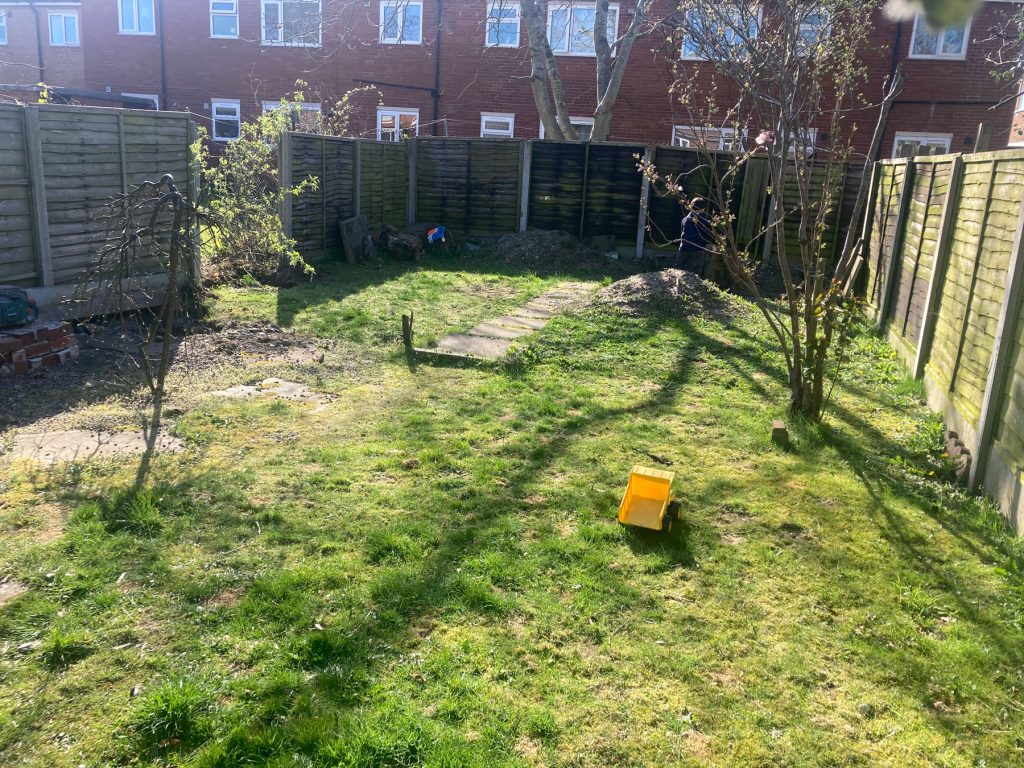
After a great deal of research and thought, the day has come. I’ve talked to as many neighbours as possible and posted letters to the others to let them know of our plans. Access from the front of the property is limited, so we are going between the buildings at the back.
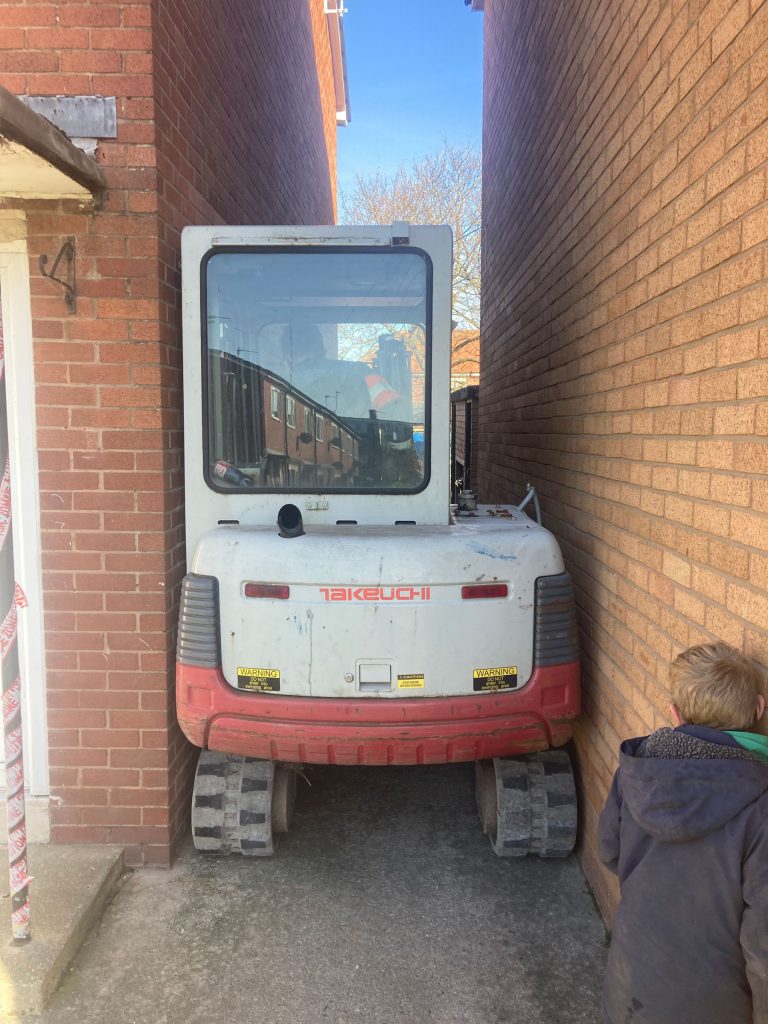
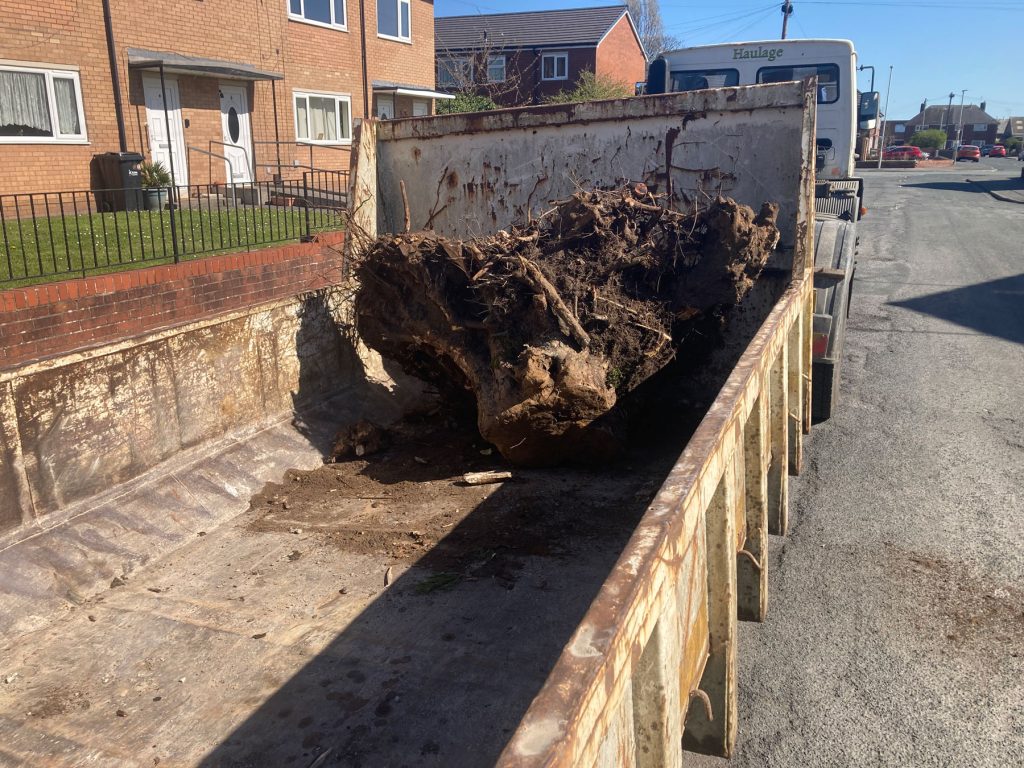
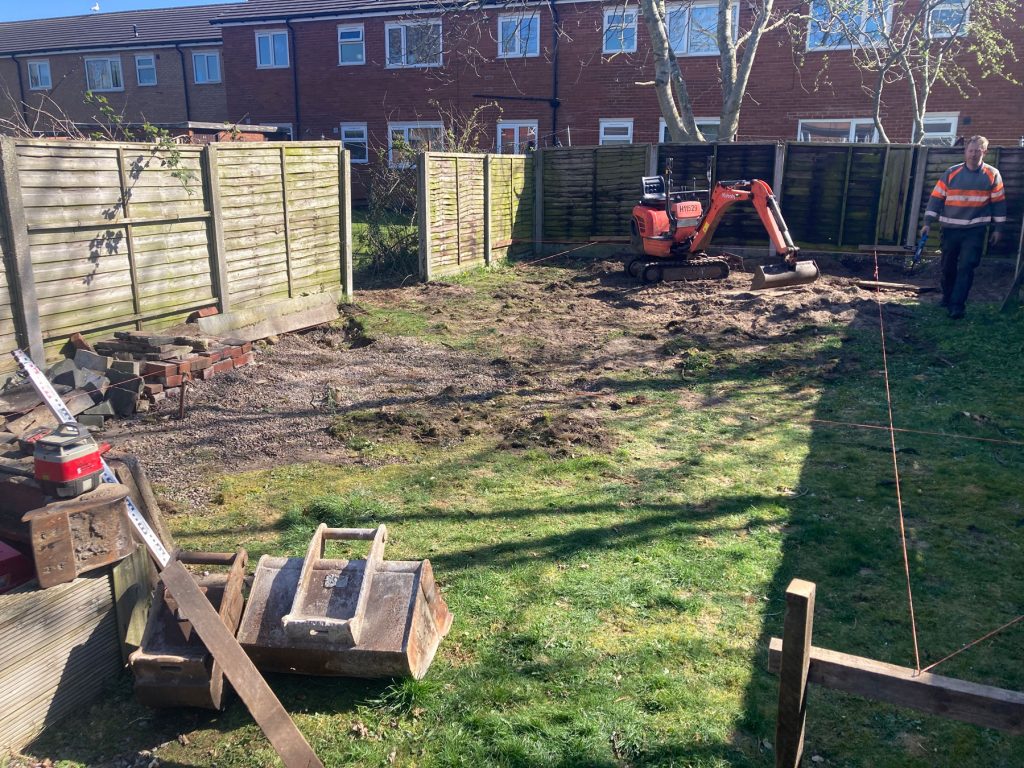
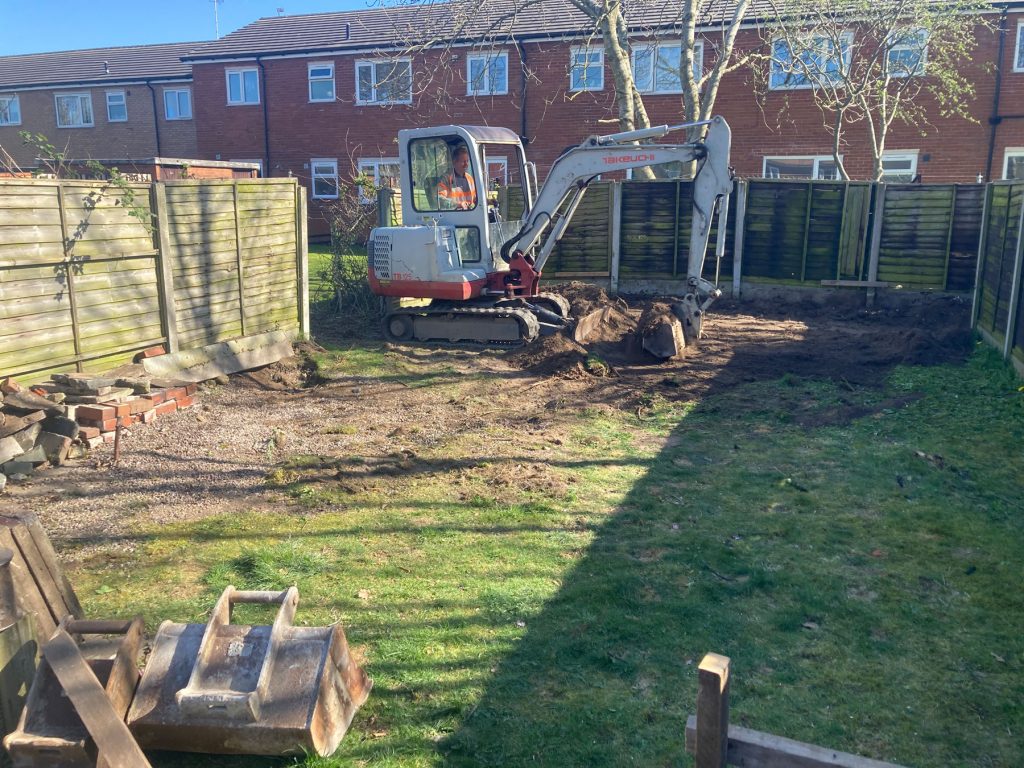
Paul’s 2.5 tonne digger fits through the gap with 2cm to spare on either side. Good job it does, because we’ll need to it remove a stubborn tree trunk from the garden.
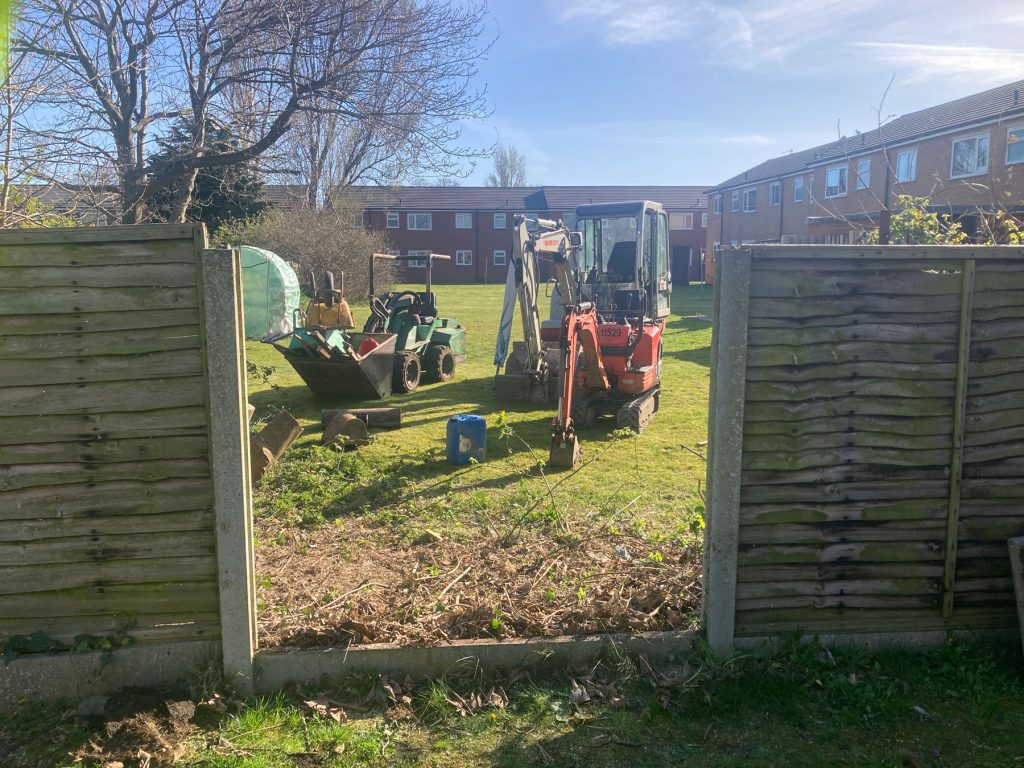
Access through the fence panel.
Before. Toy diggers were used to mark the rough position of the studio.
I’d spent hours trying to dig this root out by hand! It was therapeutic in a sense. In the planning stage, when nothing physical is happening, it was helpful to make a tiny difference to the garden.
Loaded up.
Paul used a laser level and string to mark out the position of the studio base. Pythagorus theorem was used to check it was square. Clever stuff!
Removing dirt to level the ground. We used the dirt to create a bedding border for the neighbour, which saved us having to cart it away.
End of a long day. Very relieved to have made a start and not be just talking about it.
I have been at my studio in Oyston Mill, Preston, for around 24 years. I love it. However, when we moved to our current house in St Annes, the big draw was the garden which is long enough to accomodate a studio.
I have been saving up for over a year and we are hoping to begin work around March 2025. Below are some of the specifications supplied by Hansons Steel Buildings.